
Bloating, gas, constipation, loose stools, stomach cramps or irregular bowel movement can feel frustrating, especially when the pattern keeps returning without a clear reason. For Week 4 of Gut Health Month, Optimal Health Group is focusing on Gut Microbiome, Bloating & Irregular Bowel Movement — a key topic because your gut microbiome plays an important …

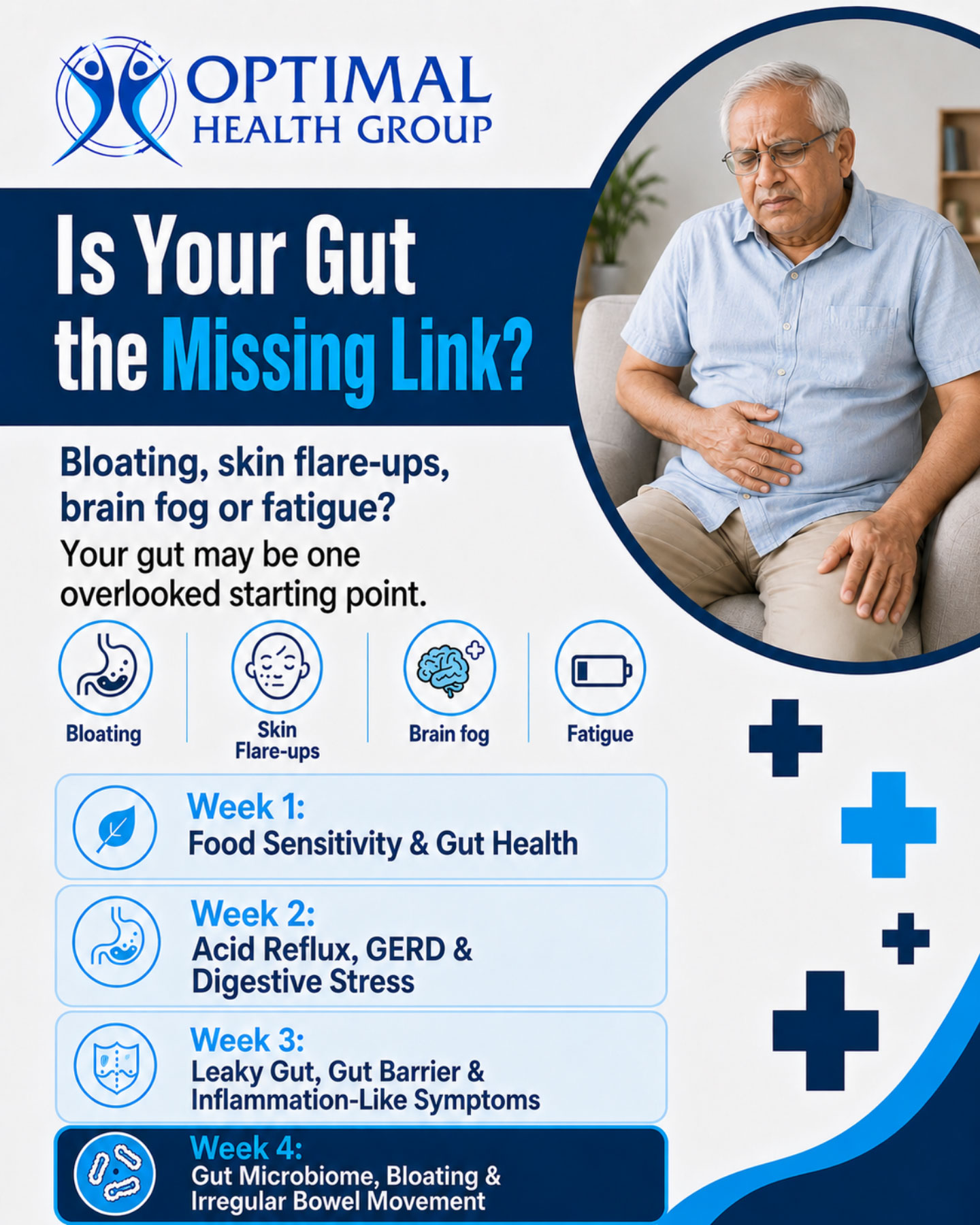
Bloating, gas, constipation, loose stools, stomach cramps or irregular bowel movement can feel frustrating, especially when the pattern keeps returning without a clear reason.
For Week 4 of Gut Health Month, Optimal Health Group is focusing on Gut Microbiome, Bloating & Irregular Bowel Movement — a key topic because your gut microbiome plays an important role in digestion, bowel rhythm, immune balance, nutrient absorption and overall gut comfort.
The gut microbiome is a community of microorganisms living in your digestive system. When this internal ecosystem is balanced, digestion may feel smoother, bowel movement may feel more regular, and the gut may feel more comfortable overall. When this balance is disrupted, the digestive system may become more sensitive, unpredictable or reactive.
At OHG, we look at bloating and irregular bowel movement through a broader gut wellness lens. Instead of treating these symptoms as isolated complaints, we look deeper into food patterns, microbiome balance, digestion, hydration, fibre intake, stress, lifestyle habits and whole-body health.
Persistent bloating can be influenced by multiple factors, including diet, digestion, stress, lifestyle habits and gut microbiome balance. This is why OHG’s gut wellness approach focuses on identifying repeated patterns rather than guessing based on one symptom alone.
What Is the Gut Microbiome?
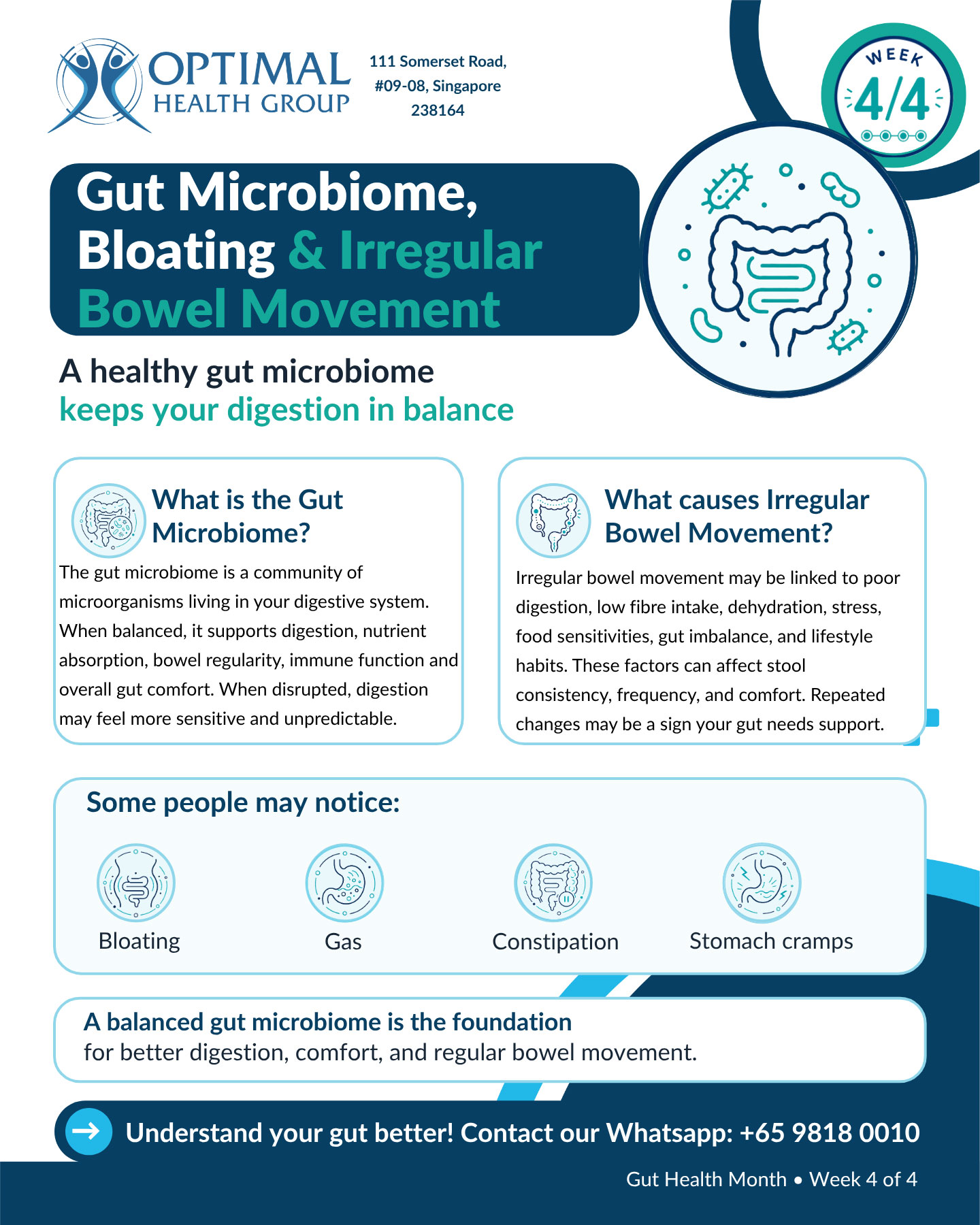
The gut microbiome refers to the community of bacteria and other microorganisms that live in the digestive system. These microorganisms are deeply involved in how the gut functions day to day.
A balanced microbiome supports digestion, nutrient absorption, bowel regularity, immune function and overall gut comfort. When the microbiome is disrupted, digestion may feel more sensitive and unpredictable. Some people may notice bloating, gas, constipation, loose stools, stomach cramps or changes in bowel frequency.
Irregular bowel movement may be linked to several contributing factors, including poor digestion, low fibre intake, dehydration, stress, food sensitivities, gut imbalance and lifestyle habits. These factors can affect stool consistency, frequency and comfort.
This is why bowel movement patterns matter. They can provide useful clues about how well the digestive system is functioning and whether the gut may need deeper support.
Why Bloating and Irregular Bowel Movement Can Be Hard to Understand
Bloating and irregular bowel movement are common concerns, but they are not always easy to explain.
Many people assume bloating is caused only by food. Food can absolutely play a role, but digestion is influenced by much more than diet alone. Eating habits, hydration, stress levels, sleep quality, movement, gut microbiome balance and bowel rhythm can all influence digestive comfort.
For example, one person may feel bloated after eating too quickly. Another may experience constipation when dehydrated or stressed. Someone else may notice loose stools after certain foods or during busy, stressful periods. Others may feel that their digestion changes from week to week, even when their diet seems similar.
This is why a personalised approach matters. The same symptom can have different contributing factors for different people.
At OHG, we help clients look for patterns across meals, hydration, bowel habits, stress, sleep, food sensitivities and whole-body signs. This broader view can reveal connections that may be missed when only one factor is considered.
How Gut Microbiome Imbalance May Affect the Body
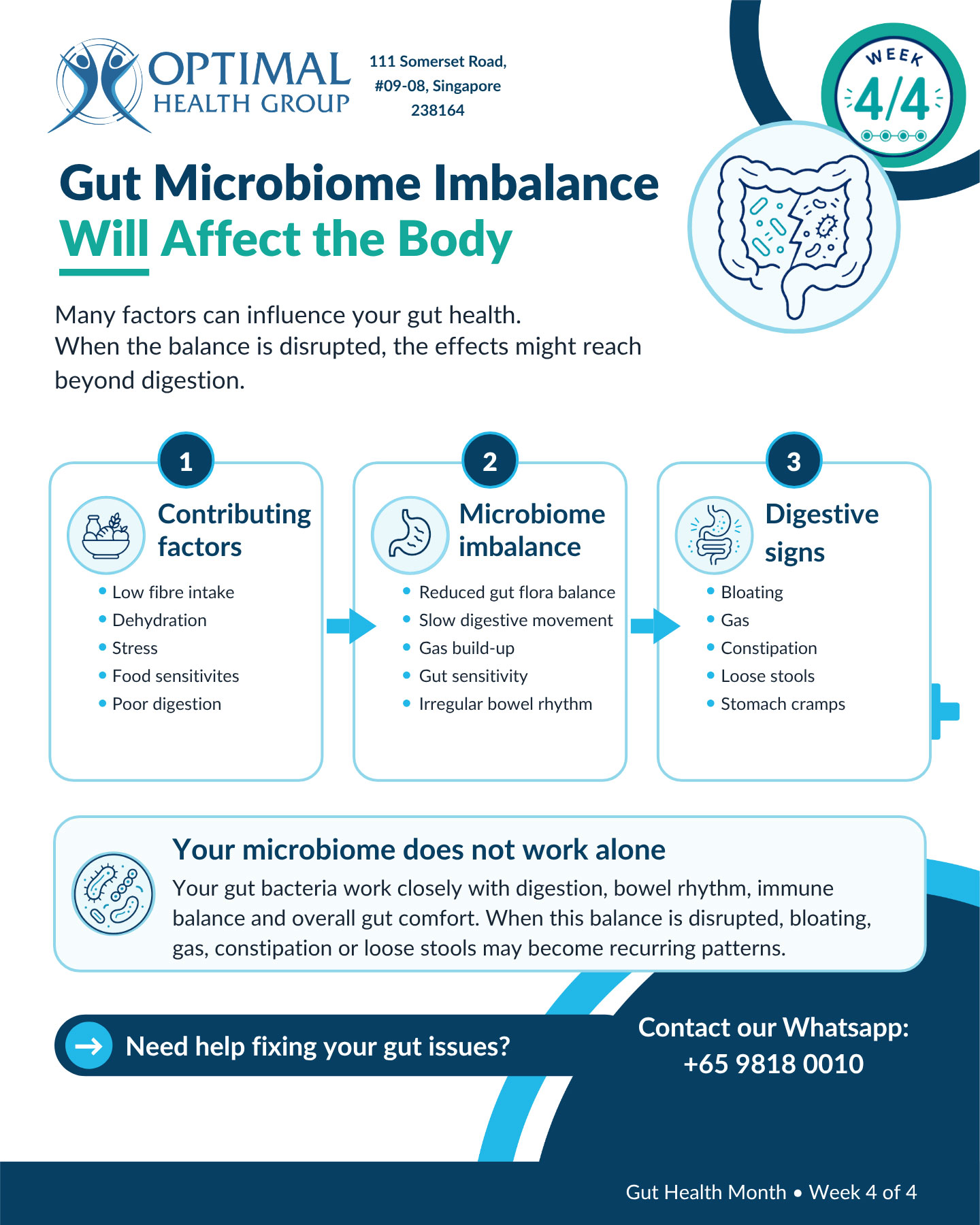
Many factors can influence gut health. When the balance is disrupted, the effects may reach beyond digestion.
Possible contributing factors include:
- Low fibre intake
- Dehydration
- Stress
- Food sensitivities
- Poor digestion
- Irregular eating habits
- Lifestyle disruption
When these factors build up, microbiome imbalance may show up as reduced gut flora balance, slower digestive movement, gas build-up, gut sensitivity or irregular bowel rhythm.
This may lead to digestive signs such as bloating, gas, constipation, loose stools and stomach cramps.
Your microbiome does not work alone. Gut bacteria work closely with digestion, bowel rhythm, immune balance and overall gut comfort. When this balance is disrupted, bloating, gas, constipation or loose stools may become recurring patterns.
Food sensitivity patterns can also complicate the picture. Some food-related symptoms may appear hours or even the next day after eating, which makes it difficult to connect symptoms back to a specific food or habit. OHG’s food sensitivity content highlights that these symptoms can include bloating, digestive discomfort, fatigue, headaches, skin concerns and bowel habit changes.
The Gut Microbiome and Whole-Body Wellness
Your gut is not just responsible for digestion. It is connected to energy, skin, immune function, brain clarity, mood and overall body balance.
When digestion is unsettled, some people may also notice fatigue, brain fog, skin flare-ups, low energy or reduced comfort after meals. These whole-body signs do not always mean the gut is the only factor, but they may suggest that the gut is part of the wider picture.
The gut-brain connection is especially important. Stress and emotional pressure can influence appetite, digestive comfort, bowel habits and symptom awareness. OHG’s bloating content highlights that the digestive system interacts closely with the nervous system, hormonal pathways, sleep patterns, stress responses, hydration and physical activity.
This is why gut health cannot be separated from daily habits. Hydration, fibre intake, sleep, stress, movement and food compatibility all play a role in how digestion feels.
For clients dealing with recurring bloating or irregular bowel movement, OHG’s goal is to look beyond the surface symptom and understand how the whole system may be responding.
Start Supporting Your Gut Microbiome
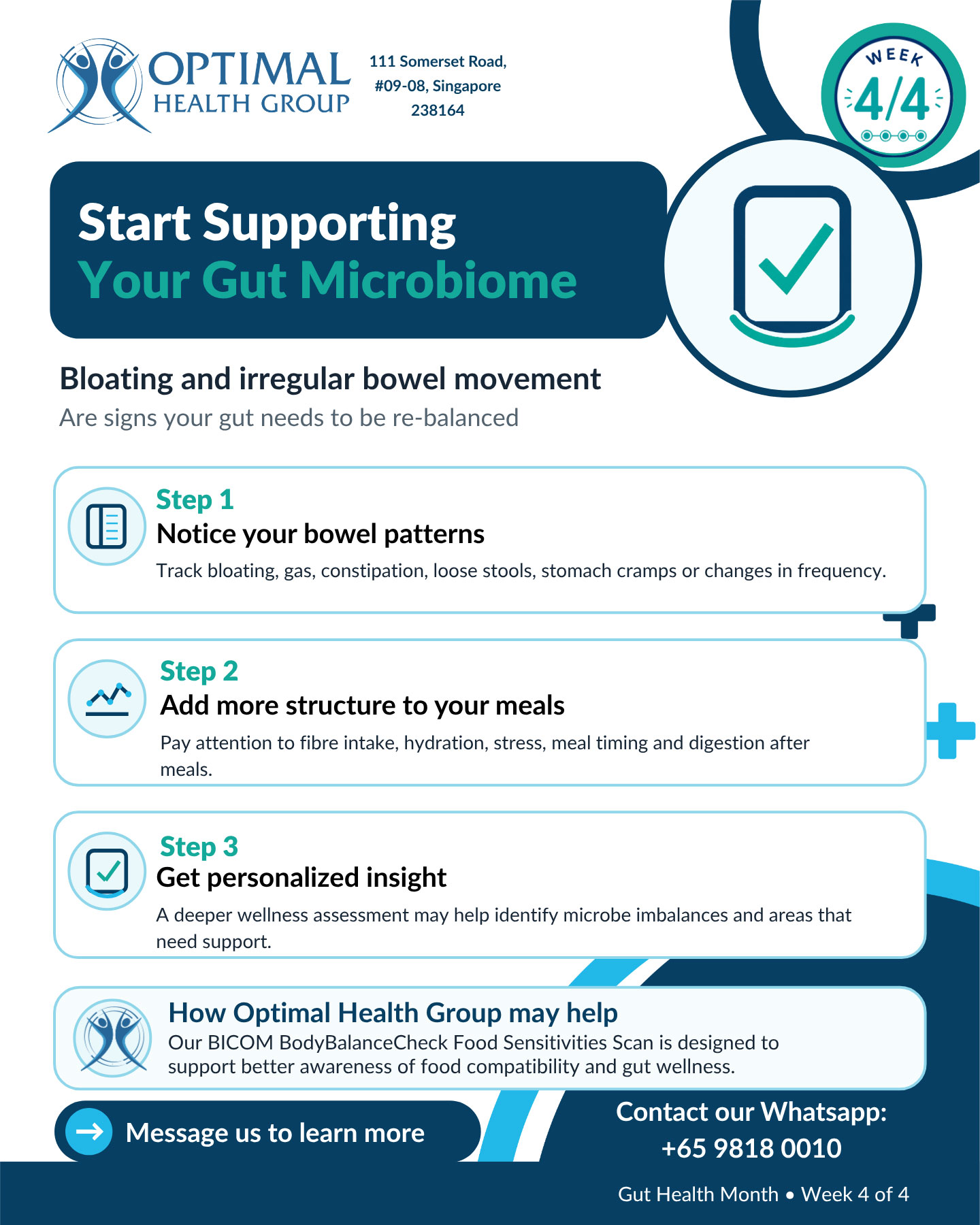
Bloating and irregular bowel movement are signs that your gut may need to be re-balanced.
A helpful first step is to notice your bowel patterns. This includes tracking bloating, gas, constipation, loose stools, stomach cramps, bowel frequency and changes in stool consistency.
It is also useful to pay attention to:
- Fibre intake
- Hydration
- Stress levels
- Meal timing
- Eating speed
- Sleep quality
- Digestion after meals
- Food sensitivity patterns
- Energy levels and brain fog
- Skin flare-ups or other repeated whole-body signs
These details may seem small, but they can help reveal patterns over time.
For example, some people may notice constipation when they drink less water or eat fewer fibre-rich foods. Others may notice bloating after certain meals. Some may experience loose stools during stressful periods. Others may see a connection between digestive discomfort, low energy and brain fog.
At OHG, a deeper wellness assessment can help identify microbiome imbalances, food sensitivity patterns and areas that may need support. Our BICOM BodyBalanceCheck Food Sensitivities Scan is designed to support better awareness of food compatibility and gut wellness.
Your Total Gut Health Solution at Optimal Health Group
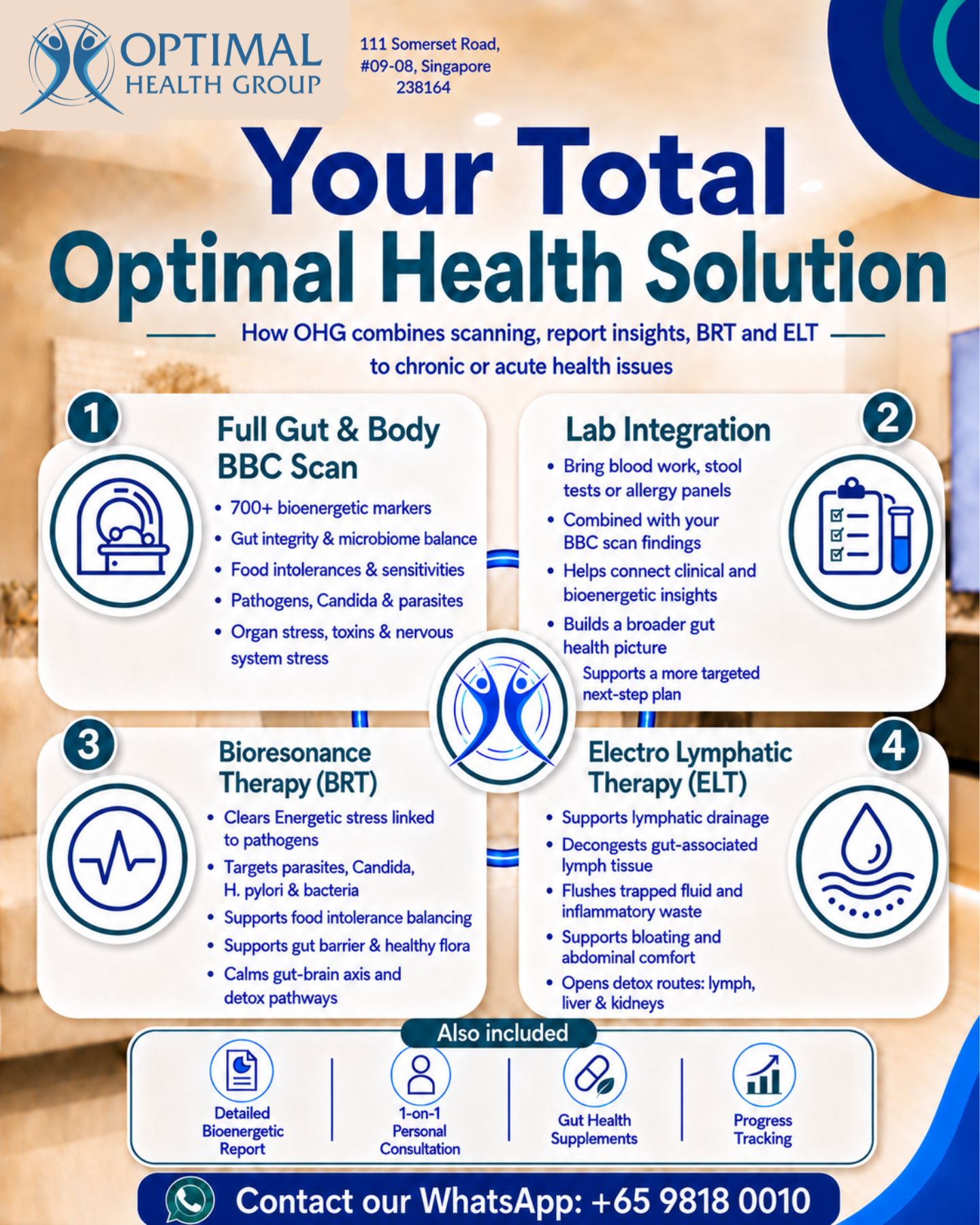
Optimal Health Group combines scanning, report insights, BRT, ELT and gut support to help clients look deeper into recurring gut concerns.
Our Full Gut & Body BBC Scan reviews a wide range of bioenergetic markers, including gut integrity, microbiome balance, food intolerances and sensitivities, pathogens, Candida, parasites, organ stress, toxins and nervous system stress.
Where clients already have blood work, stool tests or allergy panels, OHG can integrate those findings with BBC scan results. This helps connect clinical and bioenergetic insights, builds a broader gut health picture and supports a more targeted next-step plan.
Bioresonance Therapy (BRT) is part of OHG’s personalised wellness approach. OHG’s content describes bioresonance as a non-invasive, drug-free therapy based on biophysics, and positions BICOM® bioresonance as one part of a wider personalised assessment that considers food-related symptoms, digestion, stress, sleep quality, lifestyle habits, environmental load and overall body balance.
Electro Lymphatic Therapy (ELT) may also be included where appropriate as part of a broader gut wellness plan. OHG describes ELT as a non-invasive wellness modality using electrostatic, vibrational and light energy waves to support lymphatic flow and clear blockages deep within tissues. In gut wellness, ELT may support a broader plan that considers lymphatic flow, hydration, circulation, stress, sleep and digestive comfort.
Together, this creates a more complete gut support pathway for clients who want to better understand their digestive patterns and support long-term gut balance.
The Client Experience: Looking Beyond Long-Standing Gut Issues
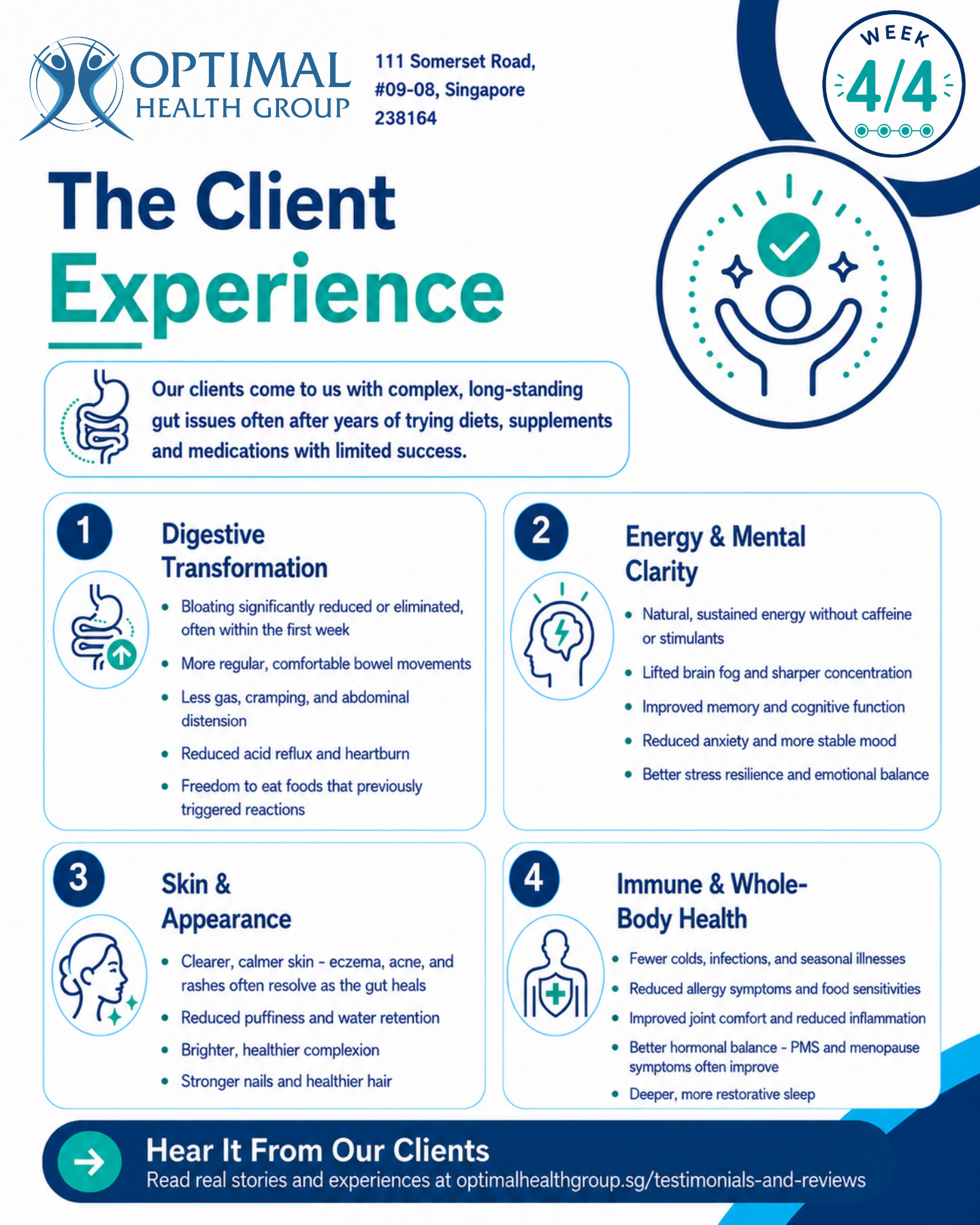
Many clients come to OHG with complex, long-standing gut issues, often after years of trying diets, supplements or medications with limited success.
This is common because gut concerns can be multi-layered. A client may experience bloating, constipation and stomach cramps, while also dealing with low energy, brain fog, skin flare-ups or stress-related digestive changes. Another client may have irregular bowel movement that changes depending on meals, hydration, sleep and emotional stress.
The goal at OHG is to help clients understand what their body is communicating.
Rather than only asking, “What symptom do you have?”, we look at the wider pattern:
- How often does bloating occur?
- Are stools regular, loose or difficult to pass?
- Is gas or cramping recurring?
- Do symptoms appear after certain foods?
- Is stress affecting bowel rhythm?
- Is hydration or fibre intake low?
- Are there signs of microbiome imbalance?
- Are skin, energy or brain fog symptoms appearing together?
- What does the BBC scan reveal?
- What support does the client need next?
This wider view helps move the conversation from temporary symptom management to a more structured understanding of gut health.
Why Personalised Microbiome Support Matters
No two people experience gut microbiome imbalance in exactly the same way.
One person may struggle mainly with bloating and gas. Another may experience constipation. Another may alternate between loose stools and digestive heaviness. Some may notice symptoms after meals, while others may feel worse during stress or after poor sleep.
This is why generic advice is often not enough.
A personalised approach allows OHG to consider food sensitivity patterns, gut microbiome balance, digestion, bowel rhythm, hydration, stress, sleep, lymphatic flow, toxin load and whole-body signs together.
OHG’s natural therapies article explains that personalised gut health approaches consider the individual’s symptoms, lifestyle factors, goals, digestion, stress and broader wellness patterns rather than relying only on general recommendations.
For clients with recurring bloating, gas, constipation, loose stools or irregular bowel movement, this type of structured assessment can help create a clearer next step.
Take the Next Step Toward Better Gut Balance
If bloating, gas, constipation, loose stools, stomach cramps or irregular bowel movement keep returning, your gut microbiome may be an important place to investigate.
At Optimal Health Group, we help clients look deeper through personalised assessment, BICOM BodyBalanceCheck insights, Food Sensitivities Scan, bioresonance wellness support, ELT where appropriate, lifestyle review and targeted supplement support.
To enquire about our Advanced Bioenergetic Assessment, BICOM BodyBalanceCheck or Food Sensitivities Scan, contact Optimal Health Group today.
WhatsApp: +65 9818 0010
Website: www.optimalhealthgroup.sg
Clinic: 111 Somerset Road, #09-08, Singapore 238164
Wishing you a happier, healthier gut,
The Optimal Health Group Team