
Bloating, skin flare-ups, brain fog, fatigue or digestive discomfort can sometimes feel random. One week, your digestion feels manageable. The next, you may feel heavy, uncomfortable, foggy or low in energy without knowing exactly why. For Gut Health Month, Optimal Health Group is taking a closer look at the gut-body connection and how everyday food …


Bloating, skin flare-ups, brain fog, fatigue or digestive discomfort can sometimes feel random. One week, your digestion feels manageable. The next, you may feel heavy, uncomfortable, foggy or low in energy without knowing exactly why.
For Gut Health Month, Optimal Health Group is taking a closer look at the gut-body connection and how everyday food choices, lifestyle habits, stress levels and individual sensitivities may influence how the body feels.
For Week 1, our focus is Food Sensitivity & Gut Health.
Food sensitivity is not always easy to identify. Unlike an immediate food allergy, food-related discomfort may be delayed, subtle or inconsistent. A person may eat something today and only notice bloating, tiredness, brain fog or skin changes hours later, or even the next day. This delay can make it difficult to connect symptoms back to the foods or habits that may be contributing to them.
Could Your Everyday Foods Be Affecting Your Gut?
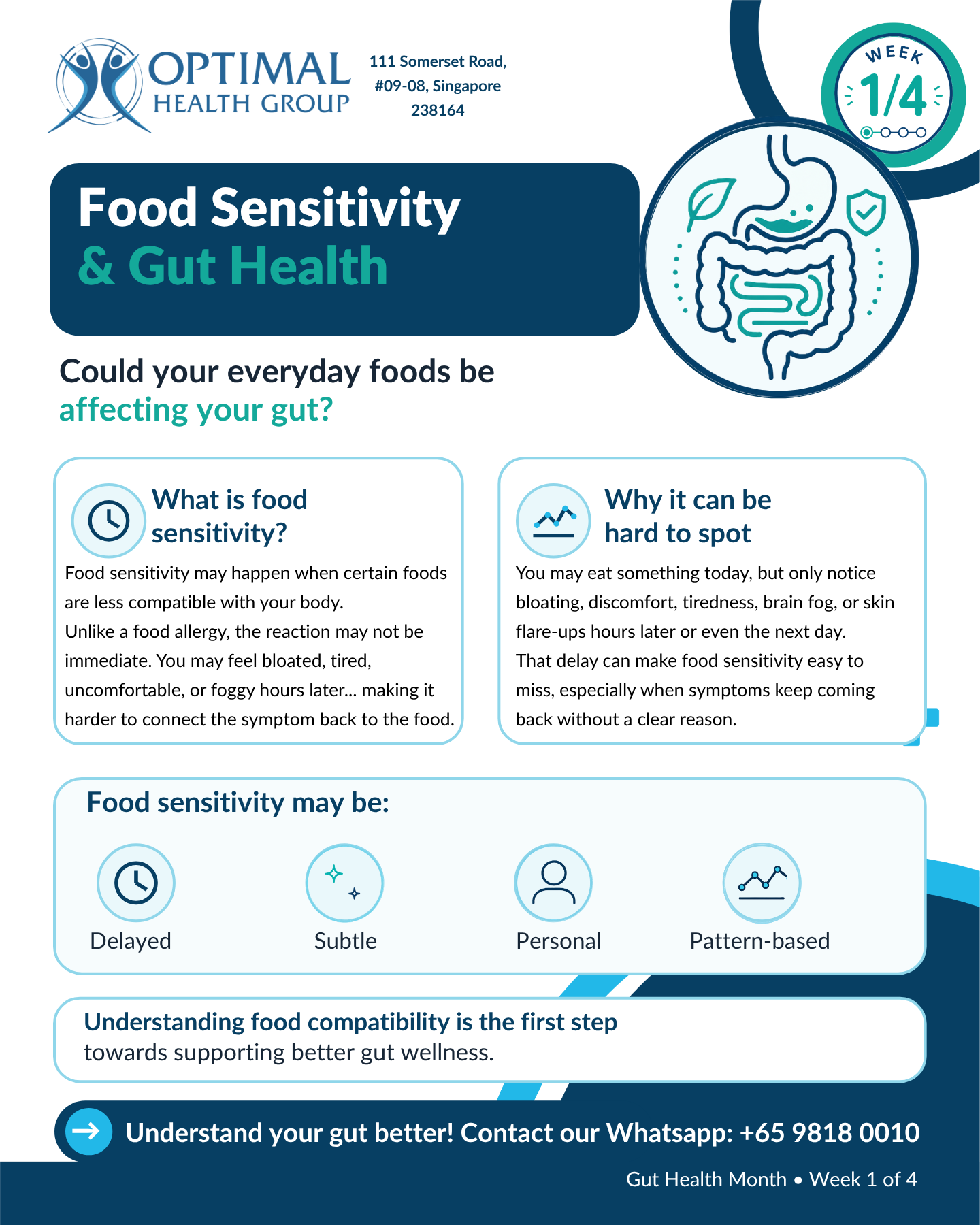
Food sensitivity may happen when certain foods are less compatible with your body. This does not mean you need to fear food or remove entire food groups without proper guidance. Instead, it is about understanding how your body responds and looking for repeated patterns.
Some people may notice digestive symptoms such as bloating, gas, stomach discomfort, reflux-like discomfort or irregular bowel movement. Others may experience whole-body signs such as fatigue after meals, headaches, brain fog, low energy or skin flare-ups. These symptoms are not always caused by food alone, but food may be one possible factor worth exploring.
This is why a personalised approach matters. Digestive wellness can be influenced by many factors at once, including nutrition, stress, hydration, sleep quality, physical activity, gut microbiome balance and daily routines. When several of these factors overlap, symptoms can become harder to understand without looking at the bigger picture.
How Food Sensitivity May Affect the Gut
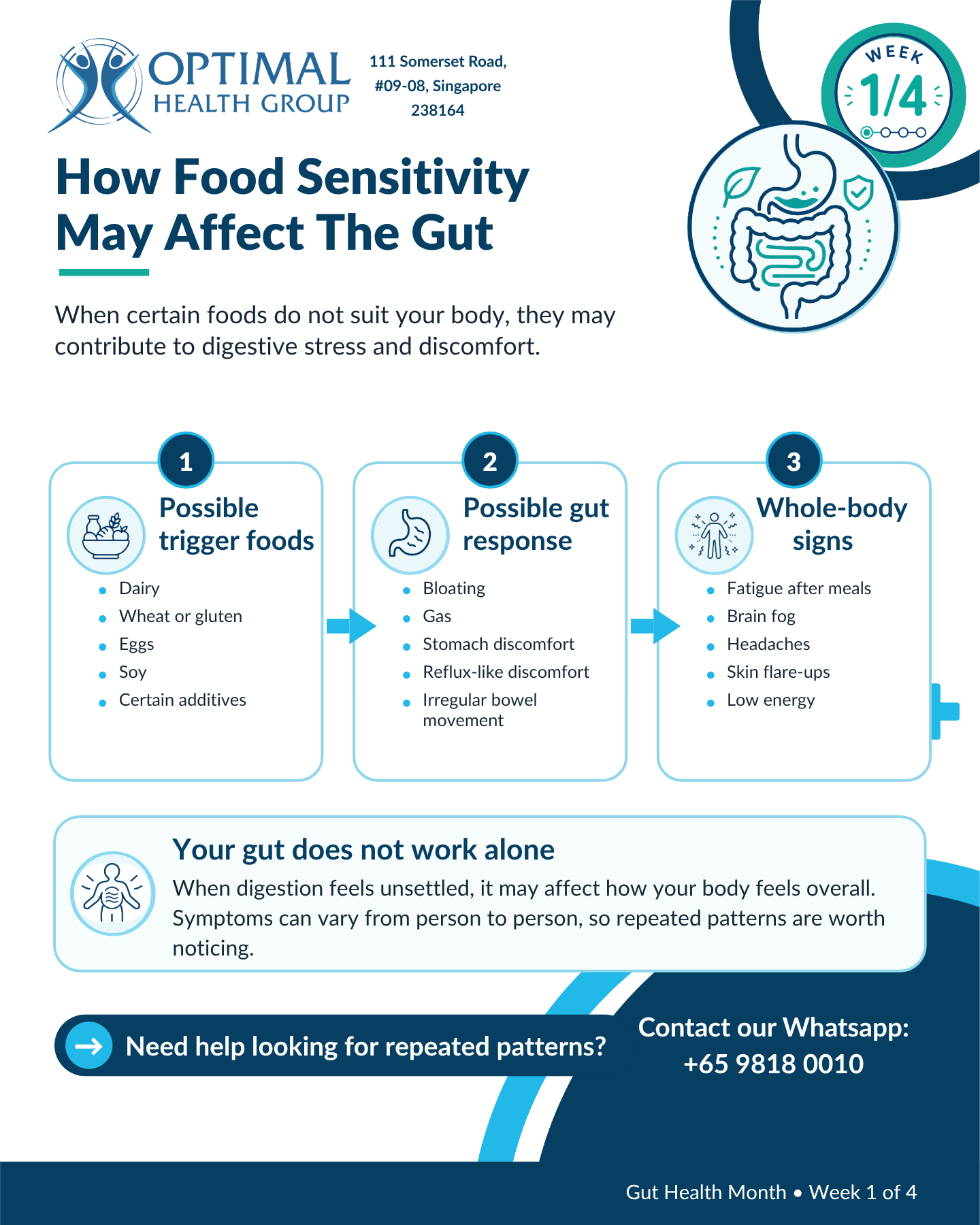
When certain foods do not suit your body, they contribute to digestive stress or discomfort. Possible trigger foods can vary from person to person and may include common categories such as dairy, wheat or gluten, eggs, soy or certain additives.
However, the important point is not to assume that one food is “bad” for everyone. Food sensitivity is highly individual. Two people can eat the same meal and experience completely different responses.
A possible pattern may look like this:
First, a person eats food that may not suit them well. Next, the gut responds with bloating, gas, stomach discomfort, reflux-like symptoms or changes in bowel habits. Over time, the person may also notice whole-body signs such as fatigue, skin flare-ups, headaches or brain fog.
This is why food sensitivity is often described as personal, delayed and pattern-based. It is not always about one obvious reaction. It is often about noticing what keeps happening repeatedly.
Your Gut Does Not Work Alone
One of the key messages across gut health research and wellness discussions is that the digestive system is connected to many other systems in the body. The gut is involved in nutrient absorption, energy production, immune activity, microbiome balance and communication with the nervous system.
The gut-brain connection is especially important. Stress, poor sleep, emotional pressure and lifestyle changes may affect digestive comfort, appetite, bowel habits and symptom awareness. This is why some people experience more digestive discomfort during stressful periods, even when their diet has not changed much.
Skin health may also be part of the wider picture. Eczema and skin flare-ups can be influenced by multiple factors including skin barrier function, environmental triggers, stress, allergens, lifestyle habits, nutrition and overall wellness patterns. At OHG, recurring skin concerns are approached from a holistic lens, where gut wellness and food-related sensitivities may be considered alongside other factors.
Start Listening to Your Gut
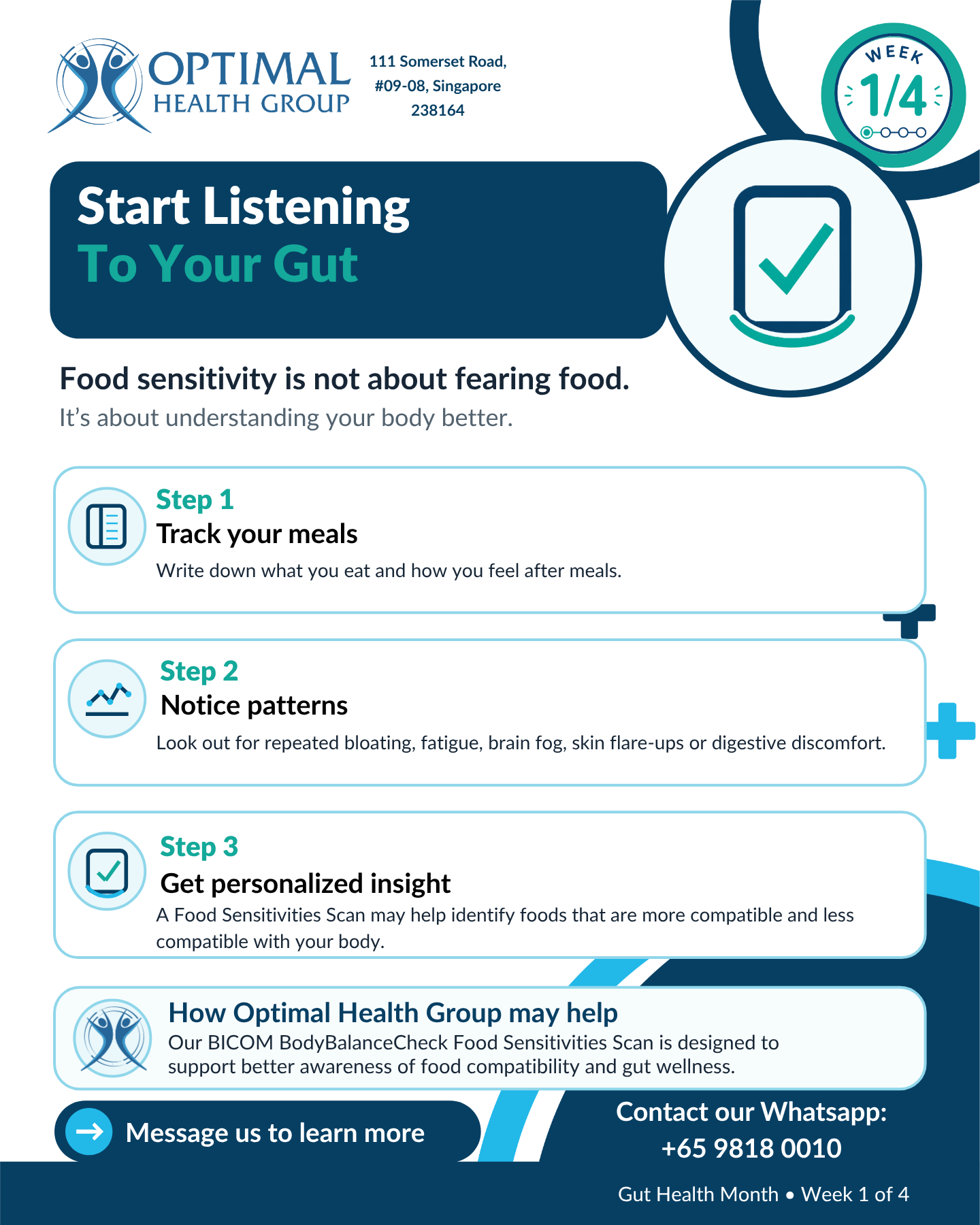
Food sensitivity is not about fearing food. It is about understanding your body better.
A helpful first step is to begin tracking your meals and symptoms. This can include what you ate, when you ate, how you felt afterwards, your energy levels, sleep quality, stress levels and any digestive or skin changes. Over time, repeated patterns may become clearer.
For example, you may notice that bloating tends to happen after certain meals, or that fatigue and brain fog appear more often after specific food combinations. You may also notice that symptoms worsen during periods of poor sleep or high stress.
At Optimal Health Group, our BICOM BodyBalanceCheck Food Sensitivities Scan is designed to support better awareness of food compatibility and gut wellness. Rather than looking at food alone, we consider how digestion, lifestyle habits, stress, sleep, hydration and individual sensitivities may interact. This whole-person approach is similar to how our existing gut wellness content frames digestive concerns: not as isolated symptoms, but as patterns that may involve multiple systems.
How Optimal Health Group May Help
For clients experiencing recurring bloating, digestive discomfort, reflux-like symptoms, food-related concerns, fatigue, brain fog, skin flare-ups or irregular bowel habits, OHG may use food sensitivity-focused assessments and BICOM® bioresonance technology as part of a broader wellness review.
Our approach is not about making one-size-fits-all recommendations. Instead, we aim to help clients explore possible patterns between food choices, digestive comfort, stress load, lifestyle routines and overall body balance.
Where suitable, this may be supported by:
- BICOM® bioresonance wellness assessment
- Food sensitivity scan
- Lifestyle and symptom review
- Nutritional support
- Electro Lymphatic Therapy as part of a wider wellness plan
- Targeted gut health supplementation
Electro Lymphatic Therapy may also be explored by some individuals as part of a broader gut wellness journey, especially when looking at overall wellness, circulation, lymphatic support, hydration, stress, sleep and lifestyle habits.
July Gut Health Month Specials

As part of Gut Health Month, Optimal Health Group is offering special July promotions to support clients who want to take a more personalised approach to gut wellness.
Advanced Bioenergetic Assessment
50% OFF this July
Now SGD 198
Usual price: SGD 388
Clients are encouraged to bring their latest blood tests for a more personalised review.
Supplements — 20% OFF
Advanced Gut Rebuild
Now SGD 120
Usual price: SGD 150
Designed to support a healthy gut lining.
Gastric Restore
Now SGD 134
Usual price: SGD 167
Designed to support digestive comfort.
Immunity Boost
Now SGD 118
Usual price: SGD 148
Designed to support immune and gut health.
Our supplements are formulated with care and designed to support your body’s natural healing ability as part of a broader wellness routine.
Take the First Step Toward Understanding Your Gut
If bloating, fatigue, brain fog, skin flare-ups or digestive discomfort keep returning without a clear reason, your gut may be one important place to start.
A personalised gut wellness approach can help you look beyond isolated symptoms and better understand how food compatibility, digestion, stress, sleep, lifestyle habits and overall body balance may be connected.
To enquire about our Advanced Bioenergetic Assessment, Food Sensitivities Scan or July Gut Health Month supplement offers, contact Optimal Health Group today.
WhatsApp: +65 9818 0010
Website: www.optimalhealthgroup.sg
Clinic: 111 Somerset Road, #09-08, Singapore 238164
Wishing you a happier, healthier gut,
The Optimal Health Group Team